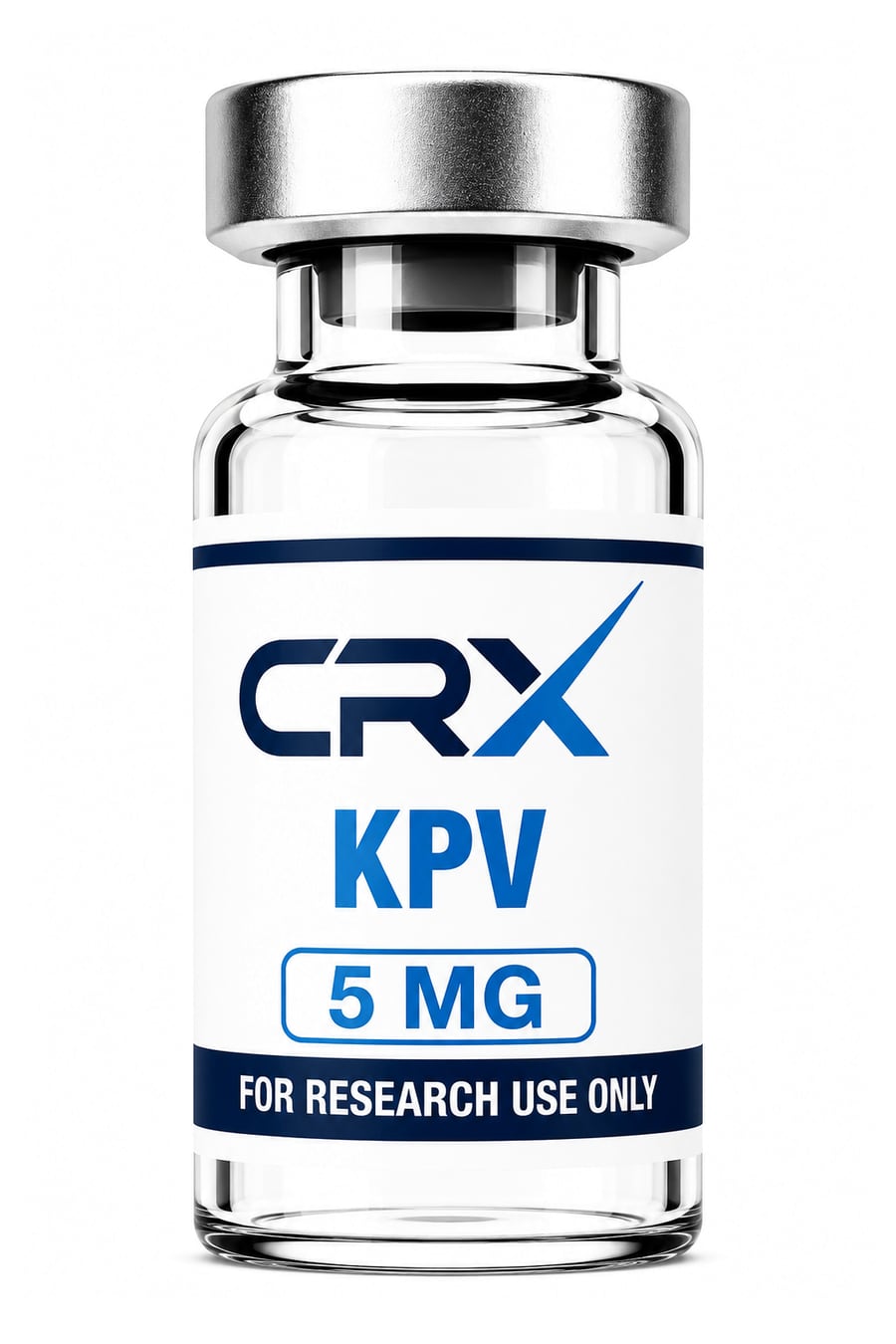
KPV
- Inflammation & immunity
- Recovery & repair
The anti-inflammatory tripeptide — studied for gut inflammation, skin irritation and surface wounds, and it calms inflammation without the skin-darkening its parent hormone carries.
Read the published research →What KPV does
KPV is the last three amino acids of alpha-MSH — the fragment that kept the hormone's anti-inflammatory action and left behind the part that darkens skin, which is the reason it was pursued at all. It is carried into gut and immune cells by the PepT1 transporter and shuts down NF-kB, the main inflammatory switch: nanomolar concentrations did this in human intestinal and T-cell cultures, and the effect survived in animals whose melanocortin-1 receptor was non-functional, so it is not simply a weaker copy of the parent hormone. Most of the whole-animal work is in mice, where treated animals with chemically induced colitis regained more weight and had less inflammatory infiltrate than colitic controls, and KPV given in drinking water lowered tumour number, size and burden in colitis-driven bowel cancer against untreated animals — an effect that disappeared entirely in animals lacking PepT1. Not all of it replicates: one group reported it killing more than 90% of Staphylococcus aureus in culture at micromolar concentrations, while an independent group testing the capped form found no antibacterial activity at all. The dose-response is bell-shaped, so more is not better.
- Gut inflammation and bowel flare-ups
- Skin irritation, acne and eczema
- Wound, mouth and eye-surface healing
- Calming inflammation without a steroid
- Mast-cell and histamine reactivity
- Anti-inflammatory support alongside repair peptides
Common areas of interest, not measured results. The findings below are the published data.
In mice with DSS colitis and in CD45RB-high T-cell transfer colitis, KPV-treated animals recovered earlier; DSS mice regained significantly more body weight and had significantly less inflammatory infiltrate on histology and significantly lower colonic myeloperoxidase activity than colitic controls, while the transfer-model histology improved without those quantitative comparators. In MC1Re/e mice carrying a nonfunctional melanocortin-1 receptor, KPV rescued every animal in the treatment group from death during DSS colitis, indicating the effect is at least partly MC1R-independent.10
In mice given azoxymethane plus DSS to induce colitis-associated cancer, 100 µmol/L KPV in the drinking water reduced tumour number, tumour size and total colonic tumour burden compared with AOM/DSS alone; in PepT1-knockout mice the same regimen left tumour number, size, burden and body weight unchanged, with only a nonsignificant trend toward lower tumour burden.12
In mice with DSS colitis, KPV loaded into 400 nm nanoparticles embedded in an alginate-chitosan hydrogel protected against the inflammatory and histological changes seen with DSS alone, and matched the therapeutic efficacy of free KPV solution at a KPV concentration 12,000-fold lower.15
For laboratory research use only. Not a drug, food, or cosmetic. Not for human or veterinary use, ingestion, or any form of consumption. Sold exclusively to qualified researchers.