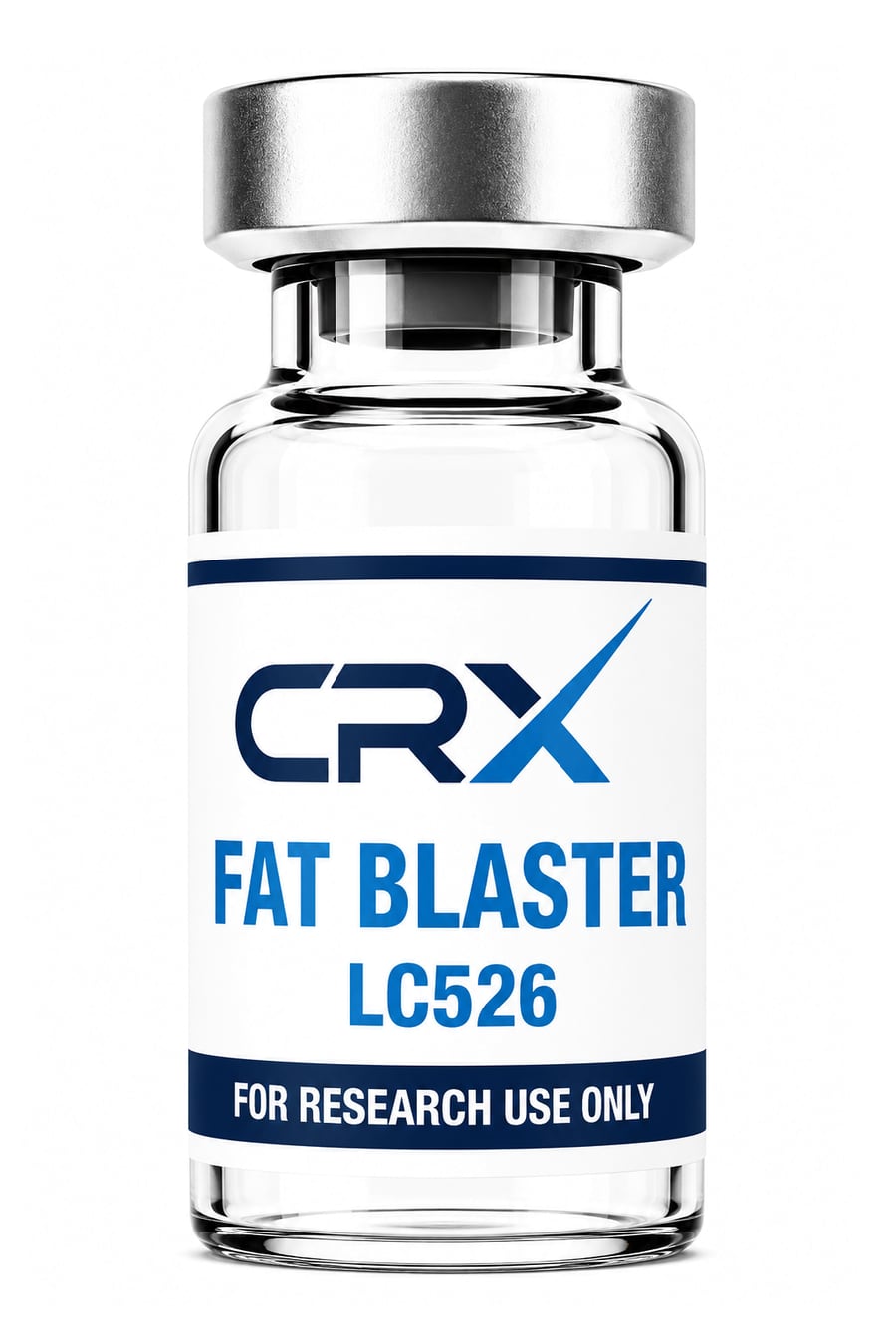
Fat Blaster
- Fat loss & metabolism
- Focus & brain health
An injectable blend of L-carnitine with the methionine-inositol-choline lipotropics, vitamins B6 and B12, and NADH.
Read the published research →What Fat Blaster does
Fat Blaster combines seven nutrients that act on unrelated pathways: carnitine carries long-chain fatty acids into mitochondria for beta-oxidation, choline donates methyl groups in the pathway that remethylates homocysteine to methionine, and NADH is the reduced form of nicotinamide adenine dinucleotide. No published study has tested this mixture, this route, or a methionine-inositol-choline injection at all, so everything on this page is constituent evidence, almost all of it oral and at exposures well above what a single vial holds. Two meta-analyses of oral carnitine found average weight differences against control of roughly a kilogram, an effect that shrank the longer trials ran and that was modelled to peak at an oral intake several times the carnitine in a whole vial. A systematic review of 315 weight-loss supplement trials rated only 16.5% of them low risk of bias with data sufficient to judge efficacy at all. The one human study here using an injected route gave choline into a parenteral-nutrition feed to reverse liver abnormalities in choline-deficient patients and measured no body-weight or fat outcome, while vitamin B12 showed no effect on cognition or mood in people who were not deficient.
- mitochondrial fatty acid transport
- one-carbon and methyl-donor metabolism
- hepatic fat and choline status
- the classical lipotropic nutrient category
- B-vitamin and NAD cofactor status
- body-composition research in nutrition science
Common areas of interest, not measured results. The findings below are the published data.
In a randomized placebo-controlled trial of 15 choline-deficient adults on home parenteral nutrition, the 7 given 2 g choline chloride in the intravenous feed gained 13.3 Hounsfield units of liver CT density at four weeks versus 5.8 in the 8 unsupplemented (p = 0.04), indicating less liver fat, with ALT falling versus placebo through week 24. Steatosis returned ten weeks after withdrawal. No body-weight or fat outcome was measured.10
In a 12-week randomized, double-blind, placebo-controlled trial in 207 adults with myalgic encephalomyelitis/chronic fatigue syndrome, the 104 given oral coenzyme Q10 200 mg plus NADH 20 mg daily showed within-group falls from baseline in cognitive fatigue perception and total FIS-40 score (p < 0.001 and p = 0.022) — changes within the treated arm over time, not against the 103 on placebo. NADH was never given alone.6
In a 24-month randomized trial of 31 adults meeting CDC criteria for chronic fatigue syndrome, the 12 assigned oral NADH had a significantly lower mean symptom score in the first trimester than those assigned nutritional supplements plus psychological therapy (p < 0.001), but scores were similar between groups in every subsequent trimester. The comparator was active therapy rather than placebo, and the NADH arm held 12 people.11
For laboratory research use only. Not a drug, food, or cosmetic. Not for human or veterinary use, ingestion, or any form of consumption. Sold exclusively to qualified researchers.