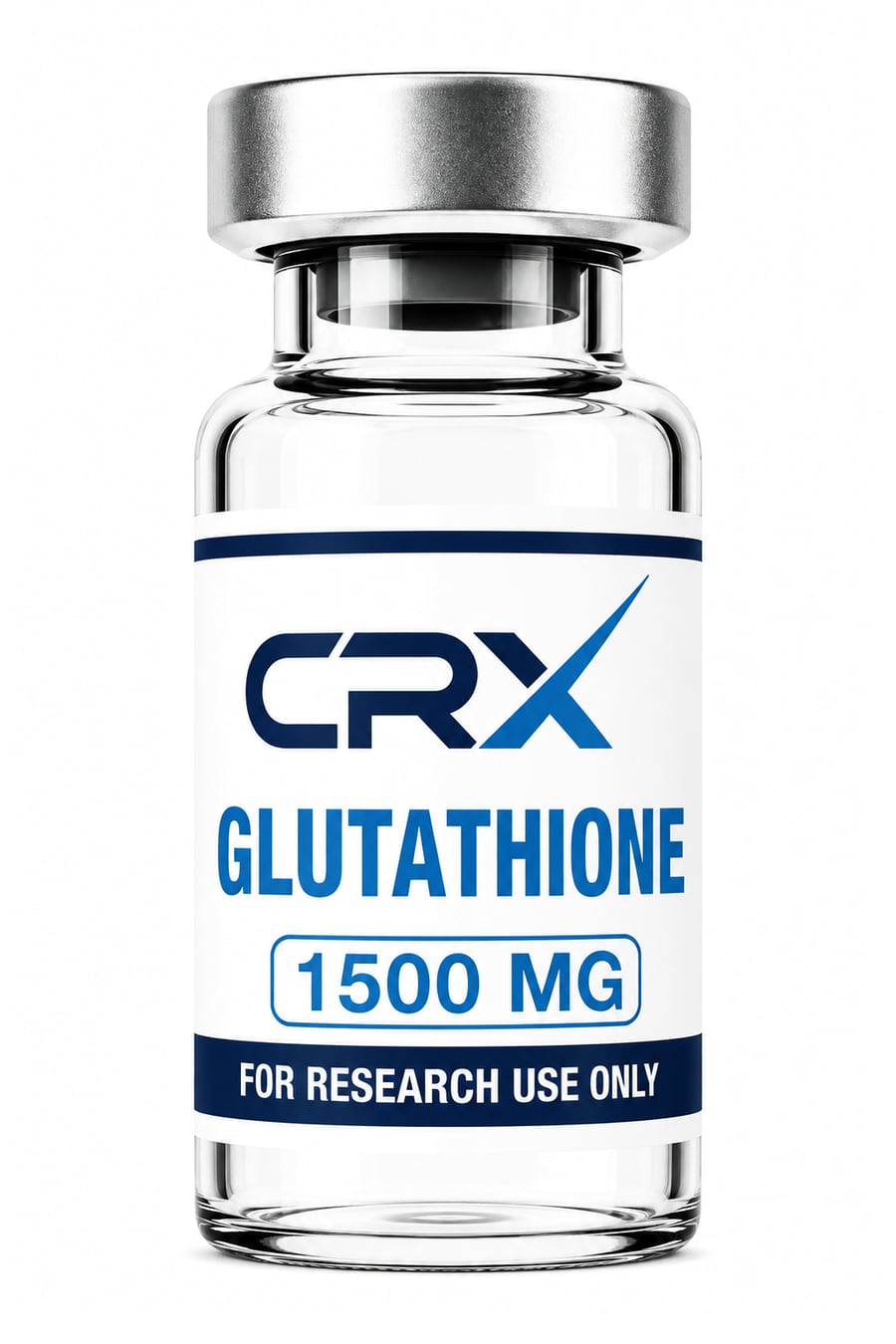
Glutathione
- Skin & hair
- Inflammation & immunity
- Longevity & anti-ageing
- Focus & brain health
The body's most abundant cellular antioxidant, studied for skin tone, redox balance and immune-cell activity.
Read the published research →What Glutathione does
Glutathione is a tripeptide the body makes for itself, and how much of a dose reaches the cell depends heavily on the route it takes. A single oral dose does not measurably raise plasma glutathione, but six months of daily oral dosing raised it 30 to 35% in red cells, plasma and lymphocytes against participants' own baselines and more than doubled natural killer cell cytotoxicity against placebo, with levels back at baseline a month after stopping. The skin-tone results come from the oral and topical routes: placebo-controlled trials report a lower melanin index on sun-exposed skin, while a systematic review found no significant change at sun-protected sites and rated the overall picture inconclusive. Injected glutathione has been tested separately, and in the one placebo-controlled skin-lightening trial 6 of 16 responded against 3 of 16 on placebo, short of significance; a placebo-controlled trial in adults with Parkinson's disease found no significant change in motor scores either.
- supporting the body's own antioxidant defences
- skin tone and pigmentation research
- oxidative-stress and redox-balance markers
- immune-cell activity measures such as NK cytotoxicity
- comparing oral, liposomal, topical and injectable routes
- detoxification and conjugation chemistry
Common areas of interest, not measured results. The findings below are the published data.
In a 4-week randomised, double-blind, placebo-controlled trial in 60 healthy Thai medical students, oral glutathione lowered the melanin index at all six measured sites against baseline, but the reduction beat placebo at only two of them, the right side of the face (p = 0.021) and the sun-exposed left forearm (p = 0.036).5
In a 12-week randomised, double-blind, three-arm trial in healthy Thai women, oral glutathione in reduced and oxidised forms left melanin index and UV spots only trending below placebo at all sites measured. The one outcome reaching significance versus placebo was reduced wrinkling at some sites, in the reduced-form arm only; increased skin elasticity was a non-significant trend.6
In a 10-week randomised, double-blind, matched-pair trial in 30 healthy women aged 30 to 50, an oxidised-glutathione lotion applied topically to one side of the face gave a significantly lower melanin index than the placebo lotion on the same woman's other side (P<0.001 at 10 weeks), with increased stratum corneum moisture and reduced wrinkle formation later in the study.7
For laboratory research use only. Not a drug, food, or cosmetic. Not for human or veterinary use, ingestion, or any form of consumption. Sold exclusively to qualified researchers.