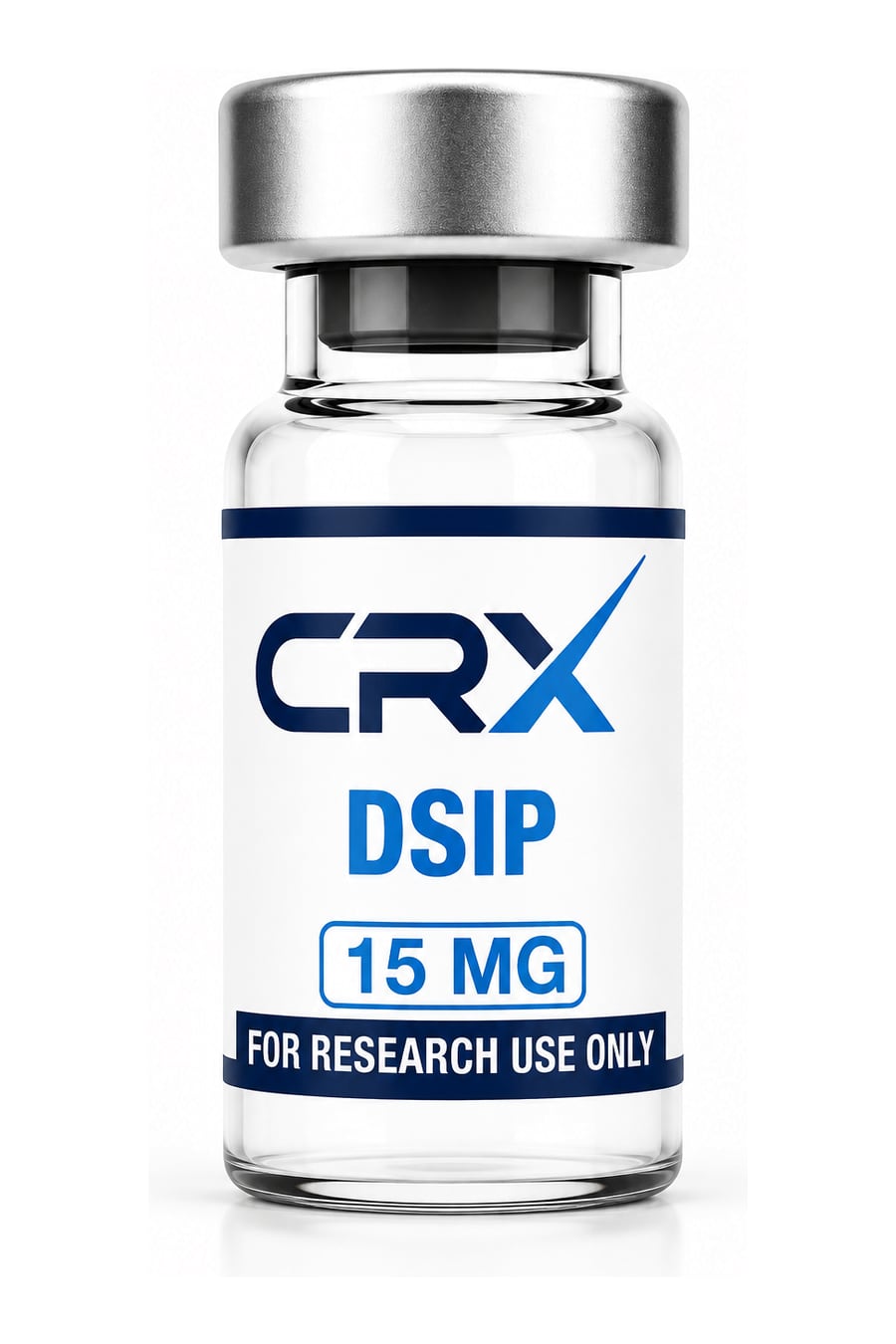
DSIP
- Sleep
- Focus & brain health
- Growth hormone
The sleep peptide — 59% more total sleep than placebo, without the sedation a sleeping pill leaves behind.
Read the published research →View COAs1 report
| Tested sample | Task number | Analysis date | Measured results | Report |
|---|---|---|---|---|
| 15 mg | 171236 | Jun 22, 2026 | DSIP: 17.26 mg · Purity: 99.403% |
What DSIP does
DSIP is a nine-residue peptide isolated in 1977 and named for the delta-sleep assay it came out of, and unusually for a compound of this vintage its record is mostly human. A single morning infusion raised median total sleep time 59% over placebo in healthy volunteers and improved the following night's onset and efficiency, with no sedation of the classic pharmacological kind on behavioural and EEG measures. In adults with severe chronic insomnia treated for seven nights it improved sleep from the first dose, brought night-sleep efficiency and daytime rest to the level of normal controls and raised daytime alertness — though a second double-blind trial in 16 chronic insomniacs found the effect weak. Sleep is not the only use it has been put to: among 107 inpatients treated for alcohol or opiate withdrawal, symptoms disappeared or improved markedly in 97% of the opiate group and 87% of the alcohol group. Reported effects are headache in a few of those 107 patients, and in surgical patients under isoflurane a raised heart rate, reduced heart rate variability and a lightening rather than deepening of anaesthetic depth.
- Deeper, more consolidated sleep
- Sleep quality without next-day grogginess
- Daytime alertness after a broken night
- Stress tolerance and resilience
- Chronic pain and headache episodes
- Withdrawal and comedown symptoms
Common areas of interest, not measured results. The findings below are the published data.
In 16 adults with chronic insomnia randomised double-blind to intravenous DSIP at 25 nmol/kg or placebo before each of three laboratory nights, polysomnography showed higher sleep efficiency and shorter sleep latency with DSIP. The investigators judged the effects weak and partly attributable to an incidental change in the placebo group, and with no other measure including subjective sleep quality changed, concluded short-term DSIP is unlikely to benefit chronic insomnia.13
In 14 middle-aged adults with severe chronic insomnia treated double-blind and placebo-controlled for seven successive nights, DSIP improved night sleep from the first dose and further with repeated doses, brought night-sleep efficiency and daytime rest to the levels of normal controls, and significantly increased daytime alertness and mental performance; the effects persisted into the first placebo night after treatment.14
In six healthy volunteers given DSIP as a slow morning intravenous infusion at 25 nmol/kg under a double-blind crossover design, median total sleep time in the 130 minutes after treatment rose 59% versus placebo, and the following night showed shorter sleep onset, less stage 1 and better sleep efficiency; behavioural and EEG analysis showed no sedation of the classic pharmacological kind.15
For laboratory research use only. Not a drug, food, or cosmetic. Not for human or veterinary use, ingestion, or any form of consumption. Sold exclusively to qualified researchers.